








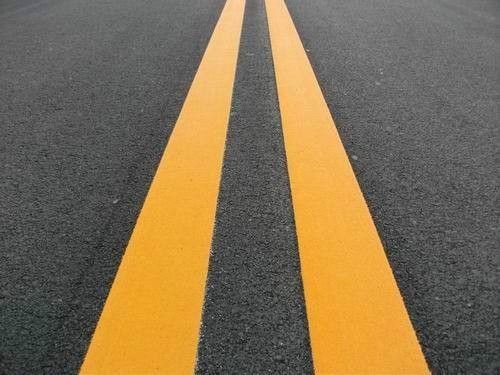
Hot-melt road marking paint is currently one of the most widely used types of road marking paint. Users who purchase hot-melt road marking paint from other manufacturers often report bubbling after application, without knowing the cause. TianTu Road Markings reminds users to pay attention to the following points when purchasing and using hot-melt road marking paint, and to choose reputable manufacturers with product and after-sales guarantees. This ensures safe and reliable use, saves costs, and improves construction efficiency.
Causes of bubbling in hot melt road marking paint
1、The air in the road gaps gets heated
When using hot-melt road marking paint, at a temperature of around 200 degrees Celsius, the drying time after application to the road is 3-8 minutes. During these few minutes, heated air rises from the fine cracks in the road, causing the paint to expand. Large bubbles can rupture the paint film, leading to cracking; small bubbles, however, remain in the paint coating or at the bottom of the marking after it has dried, affecting the appearance; bubbles that have just emerged from the film surface and have already dried leave pitting, which also affects the appearance.
Solution:You can lower the material temperature by 5-10 degrees Celsius to increase the viscosity of the paint and prevent air bubbles from rising, keeping them within the marking line. Alternatively, you can raise the material temperature by 5-10 degrees Celsius to improve the leveling properties of the paint, reduce its viscosity, and allow air bubbles to escape.
2、Asphalt heat
Currently, many highways have been converted to asphalt roads for cooling purposes. Because asphalt has a heat-absorbing effect, the road surface will not crack. However, when converting to asphalt, modifiers are added. When these modifiers come into contact with the hot-melt road marking paint and are heated, they often produce bubbles.
Solution:About 0.1% soybean oil (or salad oil) can be added during the burning process to sacrifice the compressive strength of the markings and increase the flowability of the material, thereby reducing the probability of foaming and meeting the standards of the road and customers.
3、Damp Ground
If the road is damp, the moisture inside will evaporate and cause bubbling. This reminds customers to check the dryness of the road before construction. If it is too damp, construction should not be carried out.
4、Highly alkaline cement roads and loose
Cement roads with excessive alkalinity can cause hot-melt road marking paint to bubble during application. Because highly alkaline roads attract a lot of dust, they must be thoroughly cleaned with a dust collector before construction. Additionally, if the cement road surface appears porous, a primer and temperature adjustment methods are needed to balance it.
5、Base Oil Not Dried
Before the base coat dries, the solvent in it doesn't completely evaporate, and heating it will cause it to evaporate and produce bubbles. Only after the base coat is completely dry should you apply the paint. Otherwise, in addition to easily causing bubbles, it can also easily cause the undried base coat to explode and ignite, leading to a safety accident.
The above are the main reasons why hot-melt road marking paint bubbles after application. We hope this information is helpful. Here's a reminder: whether you are purchasing or using hot-melt road marking paint, choose reputable and brand-name manufacturers and follow the guidance of professional after-sales personnel.
TATU Highway Group Road Markings is a large-scale brand enterprise with automated production lines for hot-melt road marking paint in China. For over twenty years, its hot-melt road marking paint has been tested in domestic and international markets and trusted by thousands of users. With experienced R&D personnel and after-sales engineers providing support, TATU Highway Group hot-melt road marking paint has established strong cooperative relationships with its customers. For hot-melt road marking paint, choose TATU Highway Group!
