








一、In recent years, there has been a surge in enthusiasm for innovative applications of road traffic signs and markings…
In recent years, with the rapid development of road transportation in my country, road traffic safety and service levels have received widespread attention from all sectors of society. In the practical work of various parties to improve road traffic safety and management efficiency, many innovative applications of road traffic signs and markings have emerged, such as colored markings, patterned pedestrian crossings, and actively illuminated signs.
However, the effectiveness of these "innovative" road traffic signs and markings is also somewhat controversial. Supporters say they beautify the traffic environment and enhance the warning effect, while those with doubts worry about whether they meet standards and regulations, and how liability will be determined in the event of an accident.
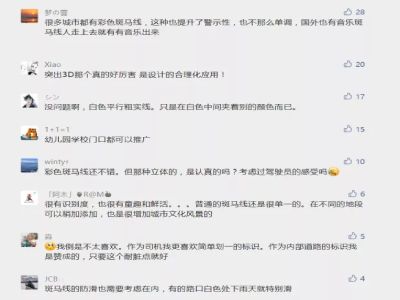
Figure 1: Screenshot of some netizens' comments
II. Some "Innovative" Signs and Markings Are Inconsistent with Mandatory National Standards
However, the "innovative" signs and markings actually used in practice are more or less inconsistent with the requirements of my country's mandatory national standard, *Road Traffic Signs and Markings*.
According to the current national standard *Road Traffic Signs and Markings Part 3: Road Traffic Markings* (GB 5768.3—2009), there are three types of lane dividers that prohibit crossing: double solid yellow lines, yellow dashed and solid lines, and single solid yellow lines. These indicate different meanings, such as prohibiting crossing or driving over the line in both directions, or allowing crossing on the dashed line side. The three solid red, yellow, and blue lines in the center of the road surface shown in Figure 2 are clearly inconsistent with the national standard. In the current national standard, lane edge lines are available in two forms: solid white lines and dashed white lines, used for different roadside situations. The two solid red and blue lines at the edge of the road surface shown in Figure 3 clearly do not comply with the national standard.
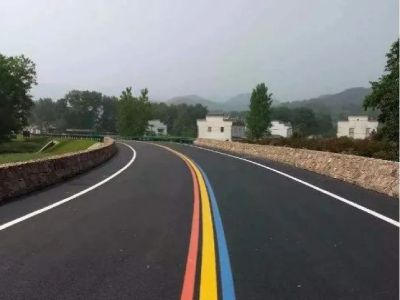
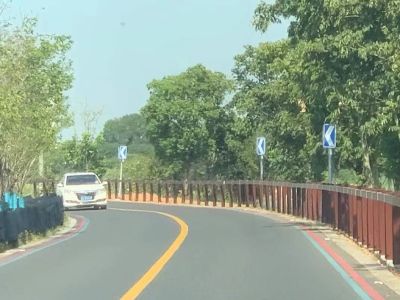
Figure 2 One of the "Innovation" markers
The current national standard "Road Traffic Signs and Markings Part 3: Road Traffic Markings" (GB 5768.3—2009) stipulates that "pedestrian crossings shall be white parallel thick solid lines." The patterned pedestrian crossing in Figure 4 clearly does not meet the requirements of the national standard, and the yellow and white alternating pedestrian crossings, strictly speaking, also do not meet the national standard requirement of "white parallel thick solid lines."
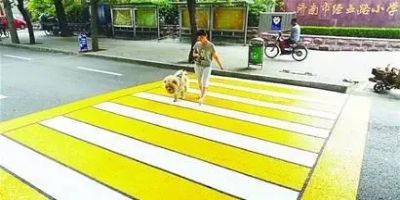
Figure 3. "Innovation" Marker (Part 3)
In addition, some "innovation" marks in actual applications do not conform to the requirements of current national standards. The specific comparison is shown in the table below.
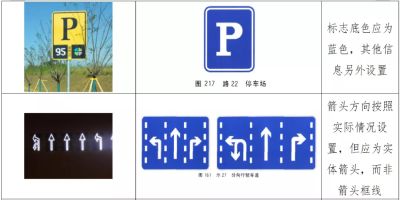
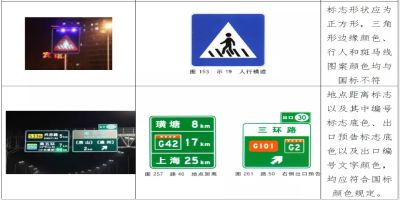
III. my country's laws, regulations, and national standards have clear requirements for the "uniformity" and "consistency" of road traffic signs and markings.
Article 25 of my country's Road Traffic Safety Law stipulates that "a unified road traffic signal system shall be implemented nationwide. Traffic signals include traffic lights, traffic signs, traffic markings, and the commands of traffic police. The setting of traffic lights, traffic signs, and traffic markings shall comply with the requirements of road traffic safety and smooth flow and national standards, and shall be kept clear, conspicuous, accurate, and intact." The word "uniform" emphasizes the principle of consistency, because the "consistency" of road traffic signals provides everyone (including road users and traffic enforcement personnel) with the same meaning, facilitating the identification and understanding of road traffic signals, and is crucial to the effectiveness of road traffic signals. The principle of "consistency" is the significance and purpose of formulating national standards, and upholding the principle of "consistency" also reflects the seriousness and authority of laws and regulations.
The color, shape, characters, and graphics of traffic signs are all integral components, each conveying a specific meaning to road users, forming the basis for the application of unified road traffic signs. The national standard "Road Traffic Signs and Markings Part 2: Road Traffic Signs" (GB 5768.2—2009) details the colors, shapes, characters, and graphics of traffic signs. Color is the first element that drivers can identify from a distance. Consistent color schemes allow drivers to quickly recognize signs and anticipate their meaning, thus helping them to successfully identify signs. The current national standard's regulations on traffic sign colors are shown in Figure 5.
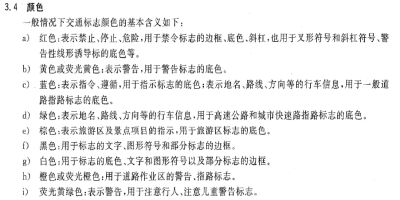
图4 现行国家标准中对交通标志颜色的规定
IV. Do National Standards Restrict the Development and Application of Innovative Technologies in the Road Traffic Industry?
Innovation is the primary driving force for development. Accelerating technological innovation is necessary to promote high-quality development of transportation, and is essential for building a new development pattern, implementing the new development philosophy, and serving the new development stage. National standards have always interacted closely with and supported technological innovation. The process of formulating and implementing national standards is a process of refining and promoting scientific and technological achievements. At the same time, national standards also establish rules and order for technological innovation. The application of innovation should be within the framework and principles stipulated by national standards, using different means, solutions, and technical paths to achieve the requirements of standard specifications; this is the true goal of technological innovation.
For road traffic signs and markings that are genuinely needed in practice but not covered by national standards, the "Road Traffic Signs and Markings Part 1: General Principles" (GB5768.1—2009) also contains relevant provisions. Specifically, applications should be submitted to the National Technical Committee for Standardization of Traffic Engineering Facilities (Highway), which will then organize reviews, determine trial areas, and conduct trial evaluations.
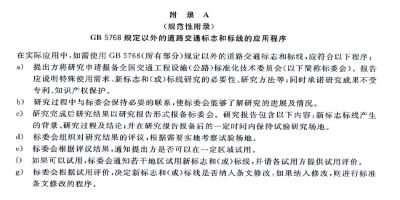
图5 对国家标准规定以外的道路交通标志和标线应用程序的规定
The innovation and adherence to standards in road traffic signs and markings does not mean breaking national standards, but rather building upon them to enhance their technological content, promoting the continuous development and progress of road traffic-related products and industries, and ensuring that the application of road traffic signs and markings is more scientific, practical, and safe.
Founded in 1998, Tiantu Road Industry Group's main manufacturing businesses encompass three major sectors: special road equipment, specialized road materials, and intelligent transportation. It is a comprehensive production and service enterprise focusing on the manufacturing of special road products and road service operations, and committed to global development. Tiantu Markings, a subsidiary of Tiantu Road Industry Group, focuses on the research, development, production, and sales of road marking products, aiming to lead the creation of future high-end marking products and contribute to the construction of a strong national transportation system.
