








Recently, the General Office of the Ministry of Transport issued a "Notice on Announcing the Results of the 2021 Annual Product Quality Supervision and Spot Check in the Highway and Waterway Industry (Second Batch)". The results show that the overall sampling pass rate for 4,257 samples from 24 provinces was 98.4%. Among them, glass beads for road markings were sampled from 13 road sections in 9 provinces, involving 9 manufacturers, 20 batches, and 202 samples, with an overall sampling pass rate of 97.5%.
Since the beginning of this year, the Ministry of Transport has conducted two rounds of supervisory inspections following the principles of "random selection and public disclosure," using methods such as "separate sampling and inspection." A total of 7,013 samples were randomly selected from 26 provinces (autonomous regions and municipalities), 84 engineering construction projects, and 197 enterprises. These samples covered key products including highway corrugated beam steel guardrails, glass beads for road markings, waterstops, plastic corrugated pipes for prestressed concrete bridges, geosynthetics (geotextiles), high-performance water-reducing agents, and composite toll cards (CPC cards).
In the first phase, a total of 2,656 samples were collected, with an overall pass rate of 97.2%. Five enterprises and five batches of products were found to be substandard. In the second phase, a total of 4,357 samples were collected, with an overall pass rate of 98.4%. Eight enterprises and nine batches of products were found to be substandard, of which two enterprises and three batches have completed rectification and have been confirmed as qualified after re-inspection. Three engineering construction projects changed their product suppliers.
The notice points out that transportation authorities at all levels should attach great importance to product quality supervision, increase the intensity of follow-up inspections of relevant enterprises and units, and urge manufacturers of substandard products to rectify the issues as soon as possible. They should continuously strengthen the dissemination and implementation supervision of national and industry standards, closely monitor changes in product quality in their respective regions, and comprehensively utilize various means such as on-site sampling, process supervision, oversight sampling, and final acceptance to further strengthen product quality supervision and management.
To the transportation departments (bureaus, commissions) of all provinces, autonomous regions, municipalities directly under the Central Government, and Xinjiang Production and Construction Corps; the Ministry of Transport's Scientific Research Institute, Highway Research Institute, and China Transportation Communication Information Center; and all inspection institutions:
To improve the product quality of the transportation industry and promote its high-quality development, in accordance with the "Administrative Measures for Product Quality Supervision and Sampling Inspection in the Highway and Waterway Industry" (Jiao Keji Gui [2020] No. 2), our Ministry organized and implemented a product quality supervision and sampling inspection in the highway and waterway industry (hereinafter referred to as the "Supervision and Sampling Inspection"). The results of the second phase of the inspection (second batch) are hereby announced as follows:
I. Basic Information
Following the principle of "random selection and public disclosure," our ministry established a database of inspection targets based on basic information on key products of highway engineering construction projects submitted by the transportation authorities of various provinces. Inspection targets were randomly selected, and 26 inspection agencies were randomly chosen to conduct the second phase of inspections through methods such as "separation of sampling and inspection." The Highway Research Institute of the Ministry of Transport served as the lead technical institution, responsible for organization, coordination, and supervision. Each inspection agency randomly selected inspectors and strictly conducted inspections in accordance with the relevant requirements of the Ministry's documents and related standards and specifications.
II. Inspection Results
In the second phase, the Ministry randomly selected 45 key highway sections in 24 provinces and inspected 252 batches of products from 102 manufacturers. These products included six categories: highway corrugated beam steel guardrails, glass beads for road markings, plastic corrugated pipes for prestressed concrete bridges, geosynthetics and geotextiles, high-performance water-reducing agents, and electronic toll collection equipment (composite toll cards). A total of 4357 samples were collected, with an overall pass rate of 98.4%. Eight companies and nine batches of products were found to be substandard. Of these, two companies and three batches have completed rectification and were confirmed as qualified after re-inspection. Three construction projects changed their product suppliers.
(I) Highway Corrugated Beam Steel Guardrails.
In 19 sections in 11 provinces, 165 batches and 3980 samples from 36 manufacturers were inspected, with an overall pass rate of 98.5%.
Among the various types of highway corrugated beam steel guardrails, 920 samples from 46 batches of 13 manufacturers were sampled, with a pass rate of 99.8%. The main non-compliant indicators were the thickness of the anti-corrosion layer, the thickness of the base metal plate, and the width of the plate.
760 posts from 37 batches of 14 manufacturers were sampled, with a pass rate of 97.4%. The main non-compliant indicators were the standard length and the thickness of the anti-corrosion layer.
600 anti-blocking blocks from 30 batches of 15 manufacturers were sampled, with a pass rate of 97.2%. The main non-compliant indicators were the appearance and thickness of the anti-corrosion layer.
100 brackets from 3 batches of 2 manufacturers were sampled, with a pass rate of 100%.
The sampling of highway corrugated beam steel guardrails was conducted in 2 batches, totaling 100 samples, with a pass rate of 100%.
The sampling of highway corrugated beam steel guardrails was conducted in 3 batches of 100 samples, with a pass rate of 100%.
... For highway corrugated beam steel guardrail splicing bolts, 22 manufacturers, 26 batches, and 864 sets of samples were sampled, with a sampling pass rate of 98.4%. The main non-compliant indicators were overall tensile load and anti-corrosion layer thickness.
For highway corrugated beam steel guardrail connecting bolts, 15 manufacturers, 23 batches, and 736 sets of samples were sampled, with a sampling pass rate of 99.3%. The main non-compliant indicator was tensile strength.
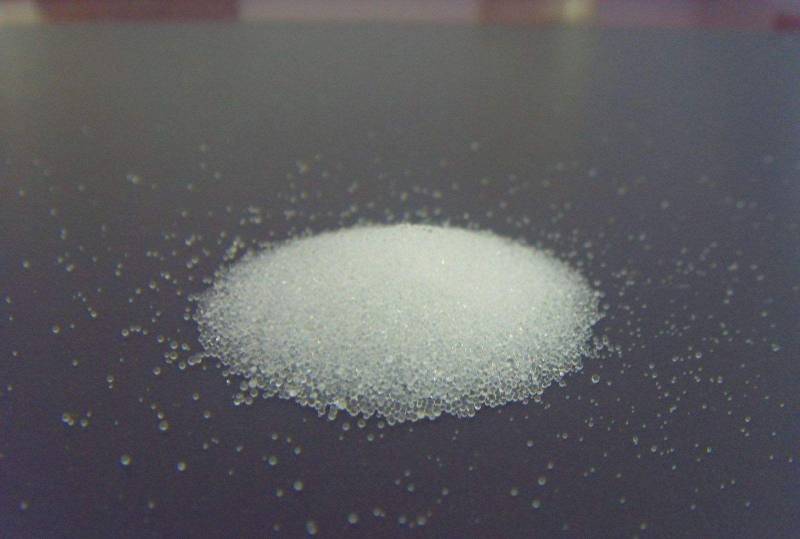
(II) Glass beads for road markings.
In 9 provinces, 13 road sections, 9 manufacturers, 20 batches, and 202 sets of samples were sampled, with an overall sampling pass rate of 97.5%. One manufacturer and one batch of products were found to be non-compliant.
(III) Plastic corrugated pipes for prestressed concrete bridges.
In 3 provinces, 3 road sections, 6 manufacturers, 6 batches, and 6 sets of samples were sampled, with an overall sampling pass rate of 100%.
(IV) Geosynthetics (geotextiles).
In 8 provinces, 9 road sections, 17 manufacturers, 17 batches, and 17 sets of samples were sampled. The overall sampling pass rate was 76.5%, and 4 manufacturers and 4 batches of products were found to be substandard.
(V) High-performance water-reducing agents.
In 6 provinces, 16 road sections, 28 manufacturers, 32 batches, and 32 sets of samples were sampled. The overall sampling pass rate was 87.5%, and 3 manufacturers and 4 batches of products were found to be substandard.
(VI) Electronic toll collection equipment (composite toll cards).
In 7 provinces, 6 manufacturers, 12 batches, and 120 samples were sampled. The overall sampling pass rate was 100%.
III. Relevant Requirements
(I) Transportation authorities at all levels should attach great importance to product quality supervision, notify relevant departments of information on substandard products found in the sampling, and increase follow-up inspections of relevant enterprises and units. They should urge manufacturers of substandard products to rectify the issues as soon as possible, submit applications for re-inspection and rectification reports in a timely manner, and conduct re-inspection work. (II) Transportation authorities at all levels should continuously strengthen the dissemination and implementation supervision of national and industry standards. They should closely monitor changes in product quality within their regions, comprehensively utilizing various means such as on-site inspections, process supervision, oversight inspections, and final acceptance to further strengthen product quality supervision and management. In particular, they should strengthen the quality supervision of geosynthetic materials (geotextiles) and high-performance water-reducing agents, which showed significant quality problems in this inspection, to ensure that only products meeting standards can enter the transportation market.
General Office of the Ministry of Transport
December 7, 2021
