








First, one should understand the road itself before proceeding with road marking projects.
When faced with a new road marking project, many procurement personnel first consider which type of paint to use, what equipment to purchase, and the price of the products. However, from a practical engineering perspective, a more important step before discussing specific products is to understand the road itself. Highways, urban roads, national and provincial trunk roads, and parking lots face different traffic environments, project scales, and construction conditions. Therefore, even if the final result is the same – white or yellow lines painted on the road surface – the exact same materials and equipment cannot be used.
Once the road type is determined, it's necessary to further understand the road surface condition, estimated construction distance, required alignment, project duration, and local construction environment. For roads already open to traffic, issues such as traffic organization and handling of existing road markings may also arise. Only by clarifying these fundamental conditions can a clearer basis be established for selecting road marking materials and equipment .
Second, the road environment dictates that material selection must be differentiated.
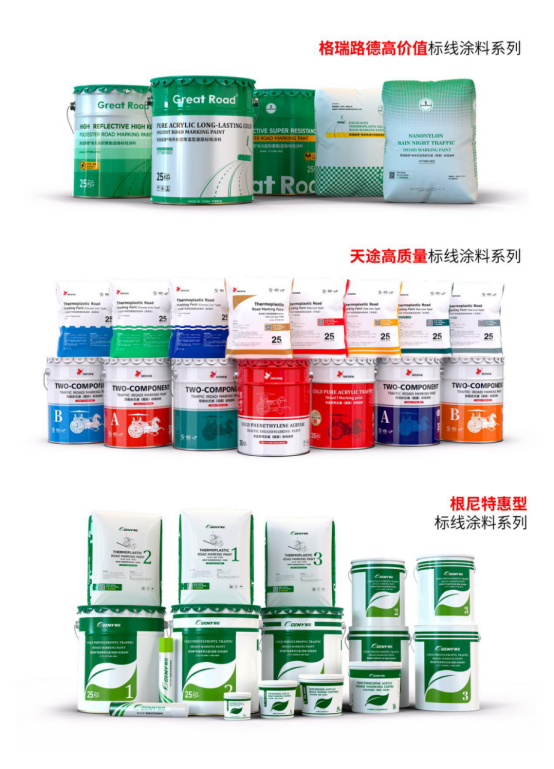
Currently, road marking projects involve various types of materials, including hot-melt, room-temperature, water-based, and two-component materials. Different materials have corresponding construction methods and application characteristics; therefore, in actual projects, no single material can simply cover all construction scenarios.
For example, before determining the materials, it is necessary to understand what construction techniques will be used in the project, the current condition of the road surface, and the construction season and environmental conditions. Since the materials will ultimately be applied to the actual road using construction equipment, material selection requires not only considering the material's own parameters but also its compatibility with the construction methods and project requirements.
Tatu Highway Coatings, a subsidiary of TATU Highway Group, focuses on road marking materials, offering a product range that includes hot-melt, ambient, water-based, and two-component products. The group's official business documents also list road marking materials as one of its main business areas.
III. Equipment selection needs to match the actual project scope.
Once the materials are determined, the construction unit also needs to consider what equipment to use. The requirements for machinery and equipment are obviously very different between a partial roadwork project for a parking lot and the construction of a highway spanning tens of kilometers. Small projects focus more on equipment flexibility and ease of use, while large projects require further consideration of continuous operation, material supply, and construction efficiency.
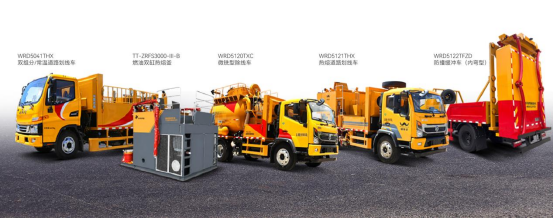
For road projects with large workloads, NANTONG WELL-ROAD SPECIAL VEHICLE CO.,LTD. can serve as an entry point for further understanding the group's road marking machinery business. NANTONG WELL-ROAD's product portfolio includes road marking vehicles, ride-on marking machines, marking removal equipment, and other road construction equipment.
Therefore, judging whether equipment is suitable for a project should not only be based on the size of the equipment or the maximum construction speed, but should also take into account the actual amount of work, material system, construction line and planned construction period.
IV. Small-scale field projects also require corresponding construction methods.
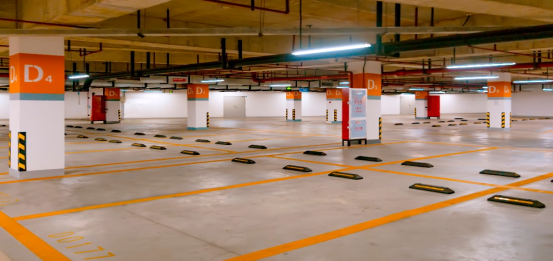
Road marking is not limited to large-scale highway construction. Parking lots, factory areas, logistics parks, schools, and hospitals also have needs for road marking construction and maintenance. These projects are often smaller in scale, and using the same equipment and organizational methods as large-scale road projects may not be economical.
The group's subsidiary, Shanghai GENY Traffic Safety Facilities Co., Ltd. , mainly focuses on small-scale venues such as parking lots and logistics parks, providing corresponding road marking materials and simple construction equipment to meet the actual needs of small-scale projects.
This also illustrates that there is no standardized equipment configuration template for road marking projects. Larger projects place greater emphasis on continuous construction, while smaller sites prioritize flexibility and actual operating costs. Ultimately, the solution must be determined based on the specific project being undertaken.
Fifth, proper configuration is more important than simply comparing product parameters.
The real challenge of a road marking project is how to complete the construction within given road conditions, workload, and time constraints. Therefore, materials and equipment are not two completely separate procurement items, but should be considered within the same construction framework.
Before a project begins, the road surface is clearly defined, the material system and construction methods are determined, and finally, the machinery and equipment are configured according to the actual workload. This reduces the likelihood of mismatches between materials and equipment later on. TATU Highway Group currently has a corresponding business system encompassing road marking materials, road marking construction machinery, and related services , enabling a deeper understanding of different road marking needs from the perspectives of materials, equipment, and applications.
