








1. A Road Marking Line Is Not Simply “Painted” on the Road
Every day, we see white, yellow, and other types of road markings on urban roads, highways, national roads, and provincial roads. For ordinary road users, these markings may simply be a common part of the traffic environment. However, from the perspective of engineering and construction, completing a road marking line requires the coordination of marking materials, mechanical equipment, construction personnel, and actual jobsite conditions.
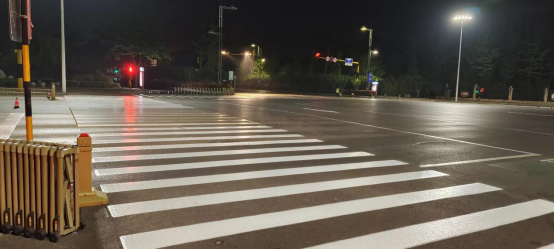
Taking a typical road marking project as an example, before construction begins, it is first necessary to understand the road type, pavement condition, and the specific marking requirements of the project, and then determine the appropriate materials and application method according to the actual situation. During construction, pavement preparation, material preparation, equipment adjustment, and road marking application are also required. For some types of road markings, glass bead application and other procedures may also be involved. Therefore, the final result of a road marking project is not determined by one single factor, but by the entire construction process.
As the scale of a project increases, the importance of this systematic coordination becomes even more obvious. Repainting several parking spaces and applying road markings along dozens of kilometers of highway are both considered road marking work, but there are significant differences in material consumption, equipment requirements, personnel allocation, and onsite organization.
2. Materials Are the Foundation of Road Markings
The first issue to consider in road marking is what type of material should be used. At present, road marking projects may use thermoplastic, solvent-based, water-based, two-component, and other types of marking materials according to different project requirements. Each type of material has its corresponding application method and characteristics. Therefore, in actual projects, it is difficult to determine whether a particular material is suitable for all applications without considering the road environment.
For example, highways and urban roads have different traffic environments, while roads frequently used by heavy vehicles experience different service conditions from parking lots or industrial areas. When selecting road marking materials, contractors need to consider road classification, pavement condition, construction season, local environment, and project technical requirements, rather than simply comparing product prices or one individual technical parameter.
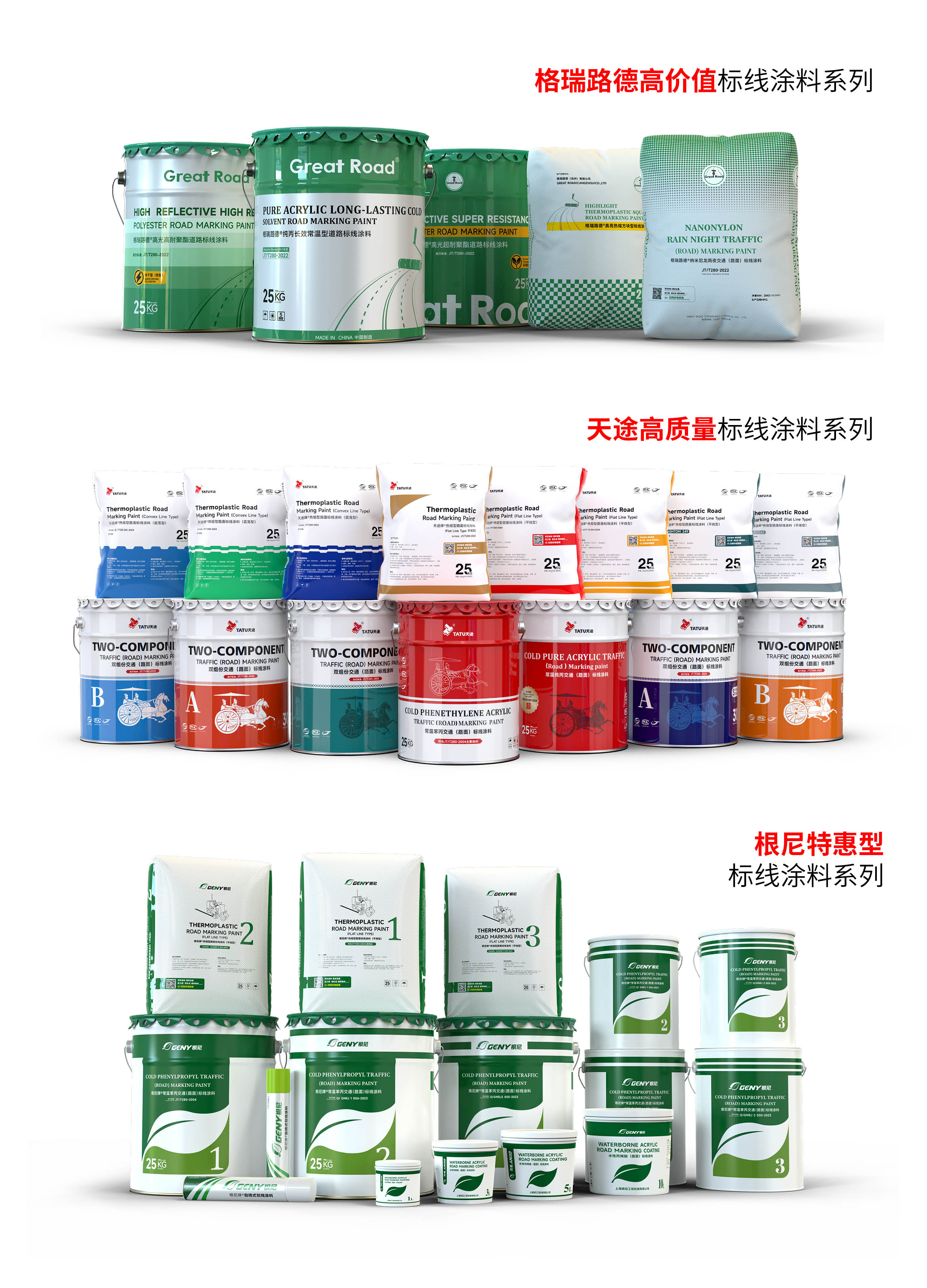
TATU Highway Group currently provides thermoplastic, solvent-based, water-based, two-component, and other road marking material systems, with TATU Coatings responsible for the Group's road marking materials business. Road marking materials are also listed as one of the Group's major business areas in its official information. The official English website uses TATU Coatings - Road Marking Materials as the corresponding brand and business name.
3. The Larger the Project, the More Important the Construction Equipment Becomes
Materials determine “what is used to make the marking,” while mechanical equipment determines “how the material is applied to the road in a stable and efficient way.” For relatively small projects, flexible compact equipment may already be sufficient. However, when the construction distance extends to dozens of kilometers or even longer, whether the equipment can operate continuously, whether material can be supplied in time, and whether different procedures can be coordinated smoothly will directly affect the overall project schedule.
Taking a large thermoplastic road marking project as an example, if the road marking equipment operates at a high speed but the upstream material preparation and supply cannot keep up, the equipment may have to stop and wait for material after working for a period of time. In this case, simply increasing the operating speed of the vehicle cannot truly improve project efficiency, because the bottleneck of the entire construction system has already appeared in another part of the process.
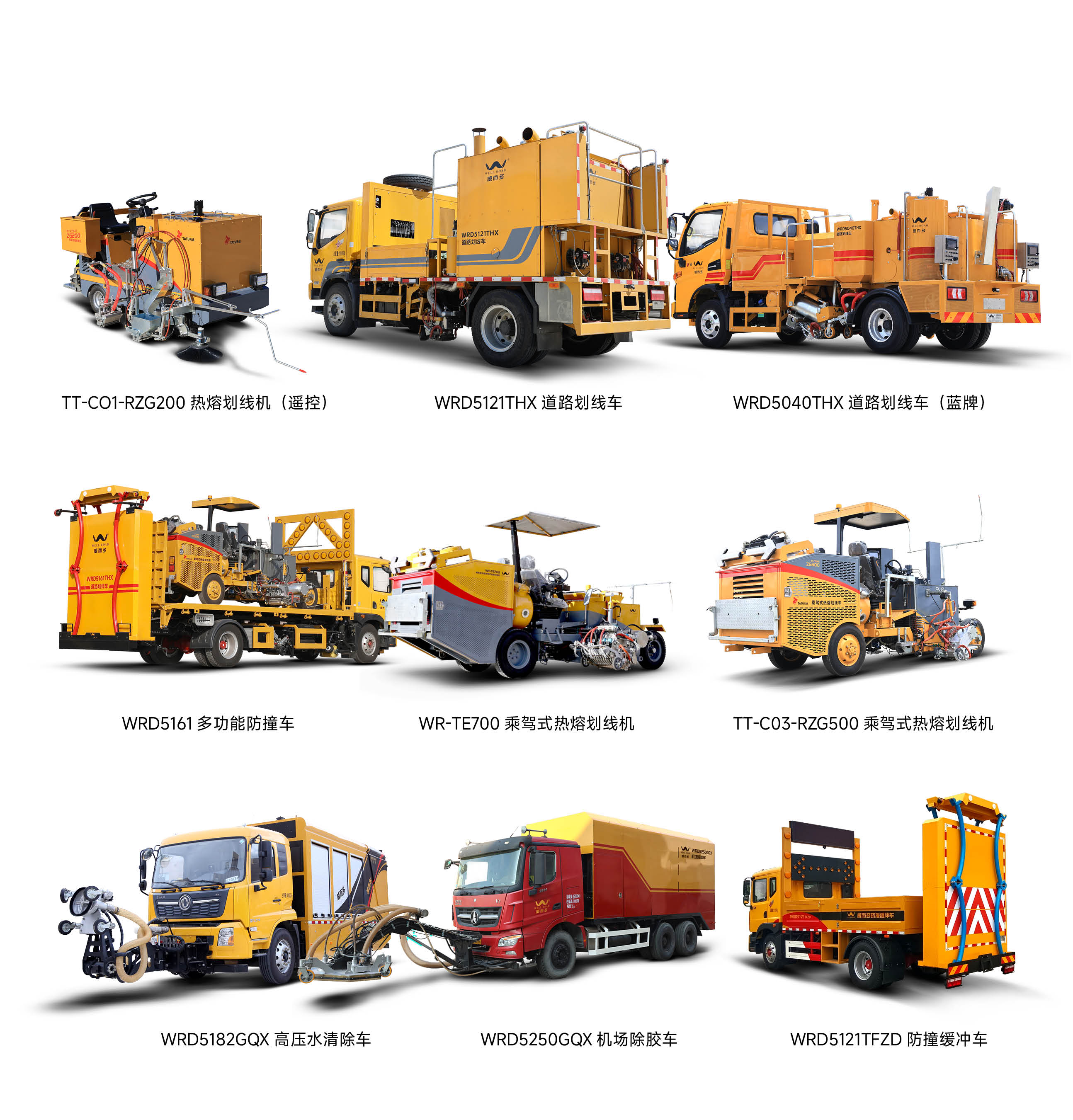
The Group's WELL-ROAD brand focuses on road marking equipment, covering road marking trucks, ride-on marking machines, removal and cleaning trucks, crash cushion trucks, and other related equipment. For large road projects, the value of mechanized construction is not only to reduce certain manual operations, but more importantly, to enable different construction procedures to work together in a more stable manner.
4. Large Roads and Small Facilities Require Different Construction Approaches
The road marking industry is not limited to highways and major urban roads. Parking lots, logistics parks, factories, schools, hospitals, and other facilities also have considerable demand for road marking application and routine maintenance. Compared with large road projects, these projects are usually smaller in scale, more dispersed, and require less material for each job.
If a parking lot only needs to repaint a dozen parking spaces, using large-scale road construction equipment is obviously unnecessary. In such situations, whether the material package size is appropriate, whether the equipment is easy to operate, and whether the construction process is flexible become more important. Therefore, different road marking products and application methods are needed for projects of different sizes.
The Group's GENY Traffic Safety brand mainly serves parking lots, logistics parks, and other facility marking scenarios, providing economical marking coatings and simple marking equipment. From mechanized construction on large roads to small-area facility maintenance, both involve applying markings to the pavement, but the actual customer requirements are clearly different.
5. Road Marking Is Moving from Individual Products Toward Systematic Construction
As road construction and maintenance requirements continue to develop, it is becoming increasingly difficult to complete a road marking project by relying on only one type of material or one piece of equipment. Materials need to match the construction process, the construction process requires suitable mechanical equipment, and equipment configuration needs to be selected according to the actual project scale. For large projects, a significant weakness in any part of the process may affect the progress of the entire project.
Therefore, before starting a road marking project, a more reasonable approach is to first determine the road type, pavement conditions, material system, project volume, construction process, and schedule requirements, and then determine the appropriate material and equipment configuration. TATU Highway Group currently includes road marking materials, road marking machinery, and special services within its business scope, together with marking scheme design, technical training, engineering construction, and other related services.
A road marking line may ultimately appear to be only a few inches wide, but from material production and equipment application to subsequent road use and maintenance, there is a complete road marking application system behind it. Understanding the relationship between materials, machinery, and construction can also help road contractors make more appropriate project planning and product selection decisions.
