








1. Road Marking Work Begins Before the First Line Is Applied
When people observe road marking work, the first things they often notice are road marking trucks, marking machines, and newly applied white or yellow lines. This can make road marking appear to be simply a paint application process. In a complete project, however, actual line application is only one stage. A series of onsite preparations may be required before the equipment begins marking.
The construction area first needs to be understood, including pavement type, existing marking condition, work area, and required marking layout. On a newly constructed road, dust, sand, stones, and other construction residues may be present. On an existing road, aged or damaged markings may already occupy the pavement.
Inspecting the worksite before application therefore establishes the foundation for subsequent material and equipment operation.
2. Why Should the Pavement Be Cleaned Before Marking?
Road surfaces are continuously exposed to outdoor conditions. Even when a pavement appears relatively clean, dust, fine particles, soil, and other contaminants may remain within the application area.
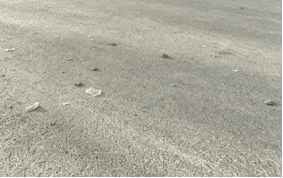
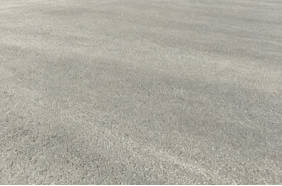
The pavement should therefore be cleaned according to actual onsite conditions before road marking begins. Construction teams need to consider not only obvious debris but also whether the application surface is suitable for the selected marking process.
Specific requirements vary between projects and material systems, but understanding and preparing the surface before applying road markings remains an important part of the overall process.
3. Existing Markings May Need to Be Treated Before Remarking
One major difference between road maintenance and new-road projects is the presence of existing pavement markings. If an existing marking layout is simply being maintained, the application method can be determined according to its actual condition. If the traffic layout has changed, however, existing lane lines, arrows, or other markings may no longer be suitable.
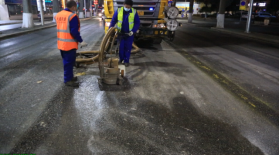
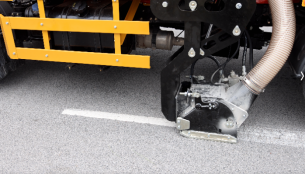
In these situations, road marking removal equipment may be used as part of the preparation process. The appropriate removal method depends on pavement condition, existing marking material, and project requirements.
Road maintenance is therefore not always a matter of simply applying another line. Existing traffic information may first need to be removed before new information can be clearly established.
4. Measurement and Layout Determine Where the Marking Will Be Applied
After the pavement has been prepared, the lines still cannot be applied randomly. Lane lines, parking spaces, arrows, and other pavement markings have specific positioning requirements, making measurement and layout important before application.
Large road projects generally follow engineering design and professional construction planning. Smaller facility applications such as parking lots and factories also require line width, spacing, and application areas to be determined in advance.
Although measurement does not physically create a road marking, it determines where the final marking will appear. Accurate preparation therefore supports the application work that follows.
5. Materials, Equipment, and Site Preparation Form One Complete Process
Road marking projects should not be understood only through a particular paint or machine. TATU Highway Group operates across road marking materials, road marking equipment, and related applications. From a project perspective, site inspection, pavement preparation, measurement, material preparation, equipment operation, and final inspection are interconnected stages.
Large road projects may focus more heavily on mechanized and continuous construction, while parking lots and industrial facilities may require more flexible localized work. In both cases, however, preparation remains an important part of the process.
Before a road marking becomes visible on the pavement, a significant amount of work may already have been completed. These preparation stages create the conditions for road marking materials and equipment to perform their intended functions.
