









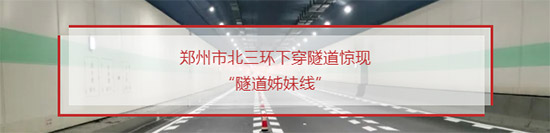
Overnight, some special road markings were added to the underpass tunnel on the North Third Ring Road in Zhengzhou...
On the afternoon of the 27th, pedestrians reported noticing that newly painted road markings had been installed overnight at the entrances and exits of the North Third Ring Road underpass and inside the tunnel. The new markings are novel in design, visually stunning, and gleaming.
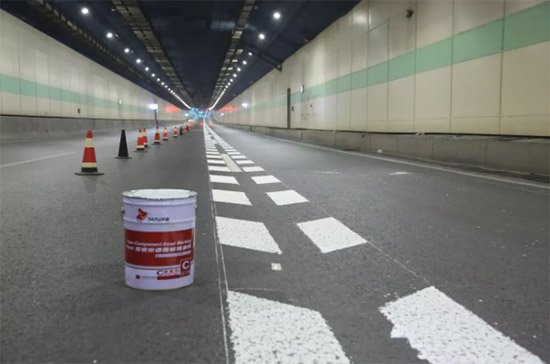
To regulate traffic order in the tunnel, prevent speeding, enhance the visual appeal of traffic markings, and thus reduce traffic accidents, the Eighth Traffic Police Brigade of the Zhengzhou Municipal Public Security Bureau, based on national standards and referencing experiences from other regions, meticulously designed these functional "tunnel markings" specifically for the characteristics of tunnel traffic. These markings come in various shapes, such as trapezoidal, herringbone, or checkerboard patterns, significantly improving tunnel safety and enhancing its visual appeal.
This new type of road marking is mainly divided into longitudinal deceleration lines, optical illusion markings, and checkerboard-shaped edge lines.
1.Longitudinal deceleration line
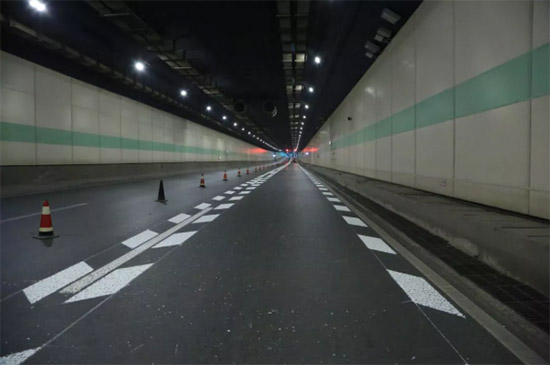
These markings consist of neatly arranged diamond-shaped blocks arranged in a "diamond string," either a single string placed inside the solid edge line or two strings symmetrically distributed on either side of the dashed line. This type of marking, commonly known as "zipper markings," is technically called "longitudinal deceleration markings."
These longitudinal deceleration lines are generally applied to tollbooth ramps, tunnels, bridges, and accident-prone sections of road such as sharp turns and slopes, requiring drivers to be highly attentive. When a vehicle passes through a section of road with longitudinal deceleration markings, the driver's subjective vision will perceive the lane gradually narrowing, creating a visual pressure that reminds the driver to slow down and drive cautiously, thus helping to prevent traffic accidents.
2.Optical illusion markings
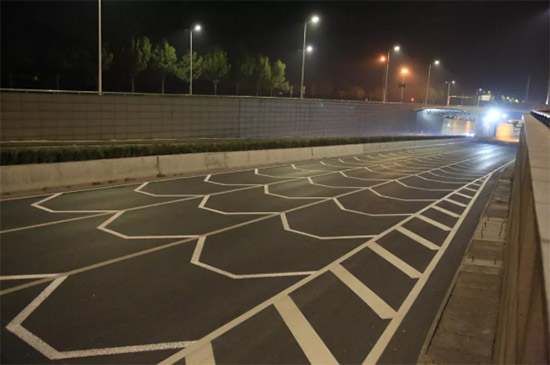
The special deceleration markings formed by numerous inverted trapezoidal markings that are equidistantly "stuck" between two lane lines are commonly known in the industry as "optical illusion markings".
The Zhengzhou Traffic Police Detachment reminds drivers that due to the difference in light levels inside and outside tunnels, vehicles entering a tunnel may experience a "black hole" illusion, causing momentary physiological and psychological discomfort. If the vehicle is traveling too fast at this time, it is easy to lose control, causing the vehicle to veer off course or rear-end collision. Illusionary visual markings create a sense of spatial compression, making the lane appear narrower and the road appear to dip in the direction of travel, prompting drivers to slow down in advance and drive cautiously, thus providing a certain degree of safety assistance.
Vehicles entering tunnels at excessive speeds are prone to accidents due to their inability to adapt. Therefore, many facilities are usually installed near tunnel entrances to force drivers to slow down. However, simple section speed measurement and speed limit signs are insufficient to prompt drivers to slow down voluntarily, hence the development of optical illusion markings.
3.Chess piece-shaped edge lines
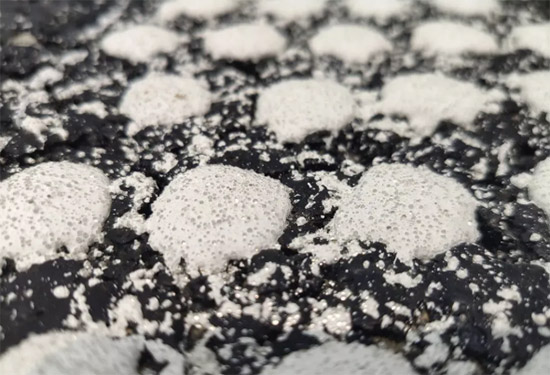
Preliminary information indicates that, to improve the reflectivity and warning effect of tunnel side markers, the side markers inside the North Third Ring Road underpass tunnel will be replaced with "chess piece-shaped markings." These markings will both alert drivers to correct driving errors through vibrations when they cross the lines and enhance reflectivity through the refraction of the dots on the surface. This special functional marking, which combines warning, reflectivity, drainage, and aesthetics, will significantly improve the channelization of tunnel markings.
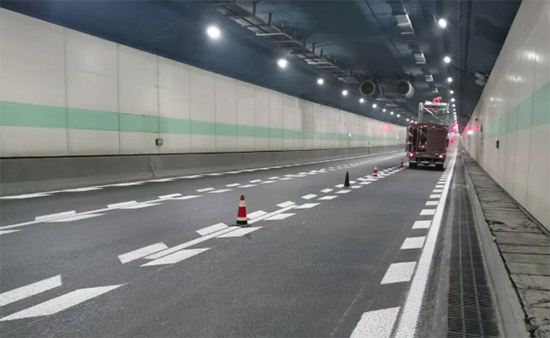
Compared to ordinary deceleration markings that are traditionally applied using a combination of multiple hot-melt vibration lines, special deceleration markings composed of the aforementioned longitudinal deceleration lines and optical illusion markings not only allow drivers to consciously adjust their vehicle speed to achieve deceleration when the road is flat and the vehicle is unaware of the deceleration, but also effectively reduce unnecessary maintenance costs caused by removing lines before application and frequent repainting.
With the completion of the "tunnel sister lines" consisting of longitudinal deceleration lines, optical illusion lines, and checkerboard-shaped edge lines in the North Third Ring Road underpass, not only will the traffic safety and efficiency of vehicles traveling from Zhongzhou Avenue to Longhu Inner Ring East Road be greatly improved, but the aesthetic effect and construction level of the tunnel will also be significantly enhanced.
4.Project Link
(1)、Construction materials
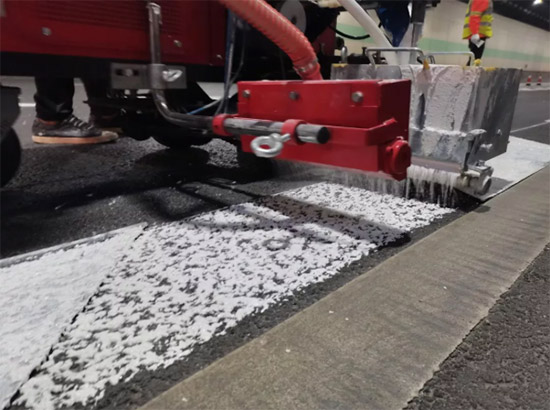
Two-component road markings are an environmentally friendly type of road marking. They have reflectivity, weather resistance, and abrasion resistance that are difficult for other types of road markings to match. Moreover, there is almost no dust abrasion throughout the entire life cycle. This effectively solves the drawbacks of traditional solvent-based road markings, such as solvent evaporation during construction, poor abrasion resistance during use, and poor reflectivity. It also solves the drawbacks of hot-melt road markings, such as fuel consumption during construction and a large amount of dust floating in the air during use.
(2)、Construction method
The aforementioned longitudinal deceleration lines, optical illusion markings, and checkerboard-shaped edge lines were all applied by our company's two-component marking vehicle and two-component multi-functional integrated marking machine, which were developed and manufactured at our Nantong factory.

With the increasing prominence of guidance issues in complex road networks, the emergence of various new road markings, such as longitudinal deceleration lines, optical illusion markings, and checkerboard-shaped edge lines, has greatly promoted the standardization of road information transmission. This plays a vital role in improving urban road capacity, enhancing traffic flow conditions, reducing traffic accidents, and protecting public safety and property.
TATU Highway Group, a globally renowned professional supplier of road marking products and services, always keeps in mind its innovative development mission of "solving industry pain points and meeting customer needs," and never forgets its gratitude to its birthplace—Zhengzhou. Following the recent completion of the Zhongzhou Avenue and Jinshui Road reconstruction project and the application of two-component checkerboard-shaped markings on some underpasses, the application of the "tunnel sister line" project for the North Third Ring Road underpass is another significant achievement of TATU Highway Group in promoting the innovation and upgrading of road markings in Zhengzhou. With the continuous emergence of high-end marking materials and construction equipment developed by the company, it is believed that TATU Highway Group will make a greater contribution to improving the overall standard of road markings in China, including Zhengzhou.
