








Hot-melt road marking machines are indispensable equipment in the construction of hot-melt road markings, widely used in highways, parking lots, communities, and other scenarios. They form wear-resistant, highly reflective markings by heating hot-melt paint, combining high efficiency with environmental friendliness. This article will comprehensively analyze the core value and application scenarios of hot-melt road marking machines from aspects such as equipment functions, technical parameters, selection tips, and operation guidelines.
I. Core Functions and Technological Advantages of Hot Melt Marking Machine
Multifunctional integrated design
TATU Highway Group hot melt line marking machines mostly adopt an integrated "melting-marking" structure, which can independently complete processes such as paint heating, stirring, coating, and glass bead spreading, making them especially suitable for construction needs in small or complex sites. High-end models also support a vibrating line marking function, allowing switching between ordinary flat lines and vibrating lines by changing the hopper, improving construction flexibility.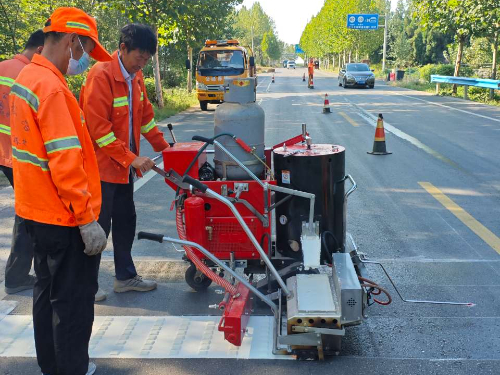
Precise temperature control and efficient operation
The equipment typically uses a liquefied petroleum gas direct-fired heating system, with the temperature stably controlled between 180-210℃ to ensure optimal coating fluidity. It can cover an average of approximately 800 square meters per day, significantly improving efficiency.
Intelligent control system
High-end models are equipped with an automated control module based on a PIC microcontroller, which enables real-time temperature monitoring, output adjustment, and marking uniformity control, reducing manual intervention and improving marking quality.
II. Key Parameters and Selection Guide for Hot Melt Marking Machines
Core Parameter Analysis
Coating width: Commonly ranges from 100-400mm, with the international standard marking width being 150mm. Users can flexibly adjust this by changing the marking bucket as needed.
Coating thickness: Typically 1.0-3.0mm, depending on the road surface type and paint characteristics.
Purchase Recommendations
Select configuration based on project volume:
Small-scale projects: Hand-push hot-melt line marking machine, suitable for scattered construction work in parking lots, residential areas, etc.
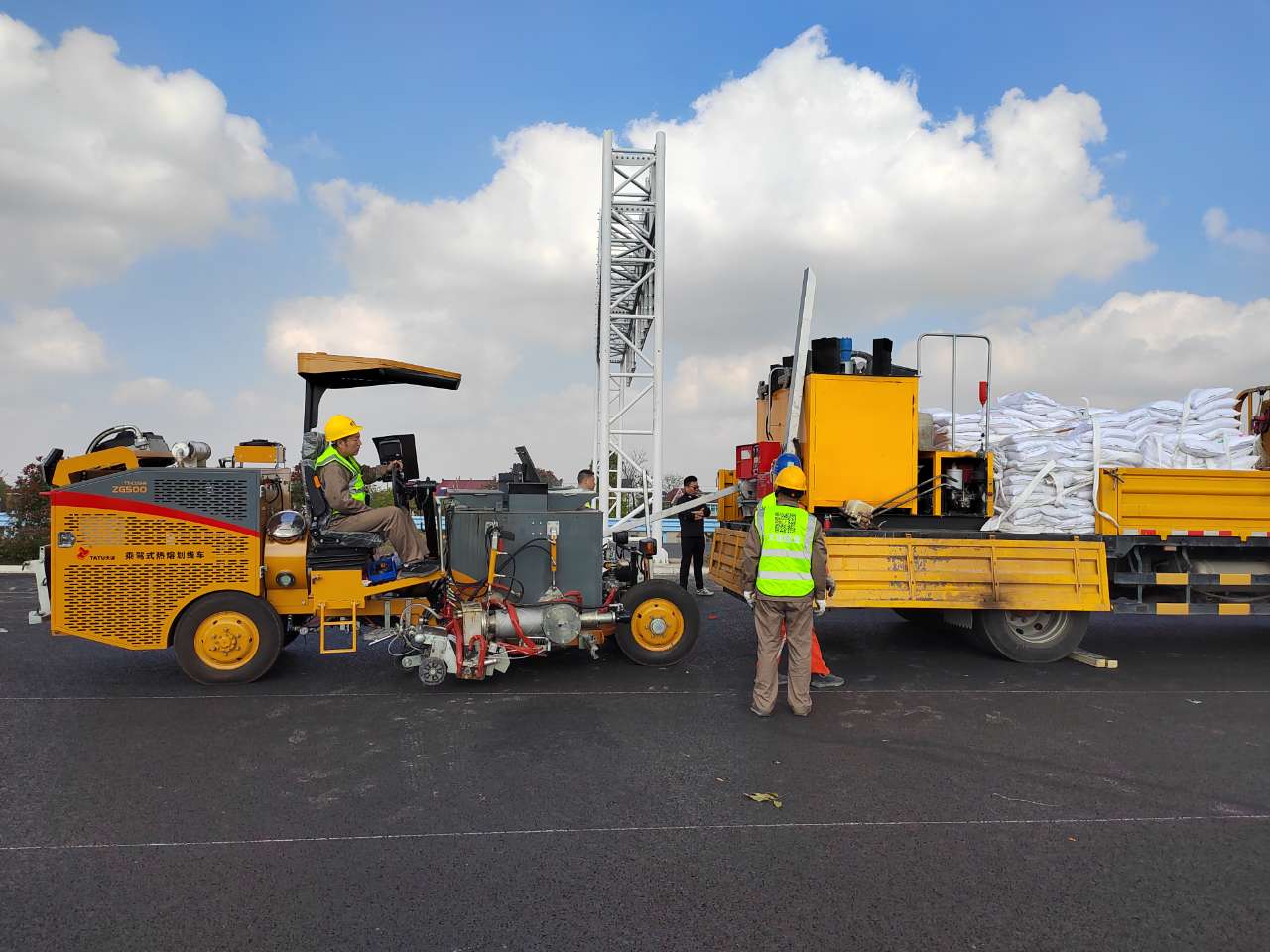
Large-scale projects: Self-propelled or ride-on hot-melt line marking machines, combined with large-capacity hot-melt kettles, blowers, and other equipment, to enhance continuous operation capabilities.
Brand and after-sales service: Tiantu Road Industry's products are patent-certified and offer stable quality assurance.
III. Operating Techniques and Maintenance Points
Adjusting line width and color
Width Adjustment: Different line widths can be achieved by changing the hopper.
Color Control: TianTu hot-melt road marking paint is available in white and yellow, and customization is supported.
Construction Precautions
During the heating stage, it is essential to ensure the paint is completely melted to prevent poor adhesion of the markings due to insufficient temperature.
A trial marking stage is indispensable; small-scale tests can verify the uniformity of the markings and the effectiveness of the glass beads.
Equipment maintenance
Clean the hopper regularly to prevent paint residue from clogging it.
Check the wear of heat-resistant components (such as floor knives and heating systems) and replace high-wear parts promptly.
The high efficiency and adaptability of hot-melt road marking machines make them a core piece of equipment for hot-melt road construction. Whether for small parking lots or large highway projects, choosing the right model and mastering the operating techniques can significantly improve construction quality and efficiency. For more brand details or the latest quote, please call 400-615-8161 or consult online.
